
Individual Therapy for Relationship Trauma, Betrayal, Trauma Bonds & Complex Trauma
Find Clarity. Find Freedom. Find Yourself.
If you have found your way to this page, you may be feeling exhausted, confused, overwhelmed, or disconnected from yourself.
Perhaps you have experienced betrayal, emotional abuse, narcissistic abuse, gaslighting, a painful relationship breakdown, or a relationship where you gradually lost confidence in your own thoughts, feelings, and needs.
Perhaps you understand that something was not healthy, but you still feel deeply attached, unable to move forward, or unsure how to rebuild your life.
You may be asking yourself:
"Why did I stay?"
"Why do I still miss someone who hurt me?"
"Why can't I let go?"
"Why don't I feel like myself anymore?"
"Will I ever feel safe and happy again?"
The answer is: recovery is not only possible but also invigorating and extremely powerful.
How do I know? I’ve done it myself and continue to delight in the beauty that exists when you transmute the toxicity, fear, overwhelm and isolation of painful trauma bonds.
“I know you’re confused. I know you’re exhausted. I also know you’ve probably forgotten what safe feels like.”
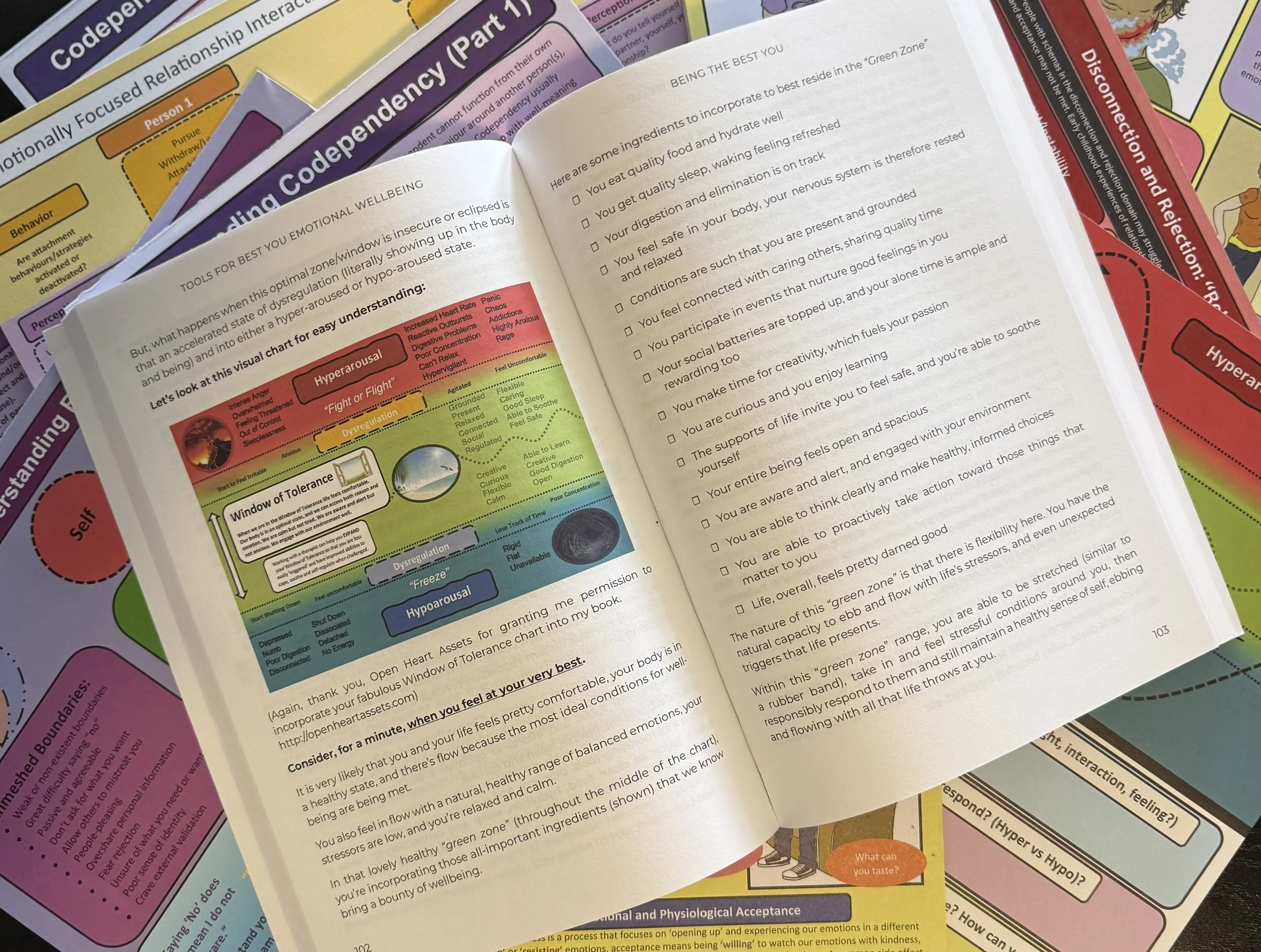
Angela Wakelin: Over 50 published resources with 70 000+ sales worldwide.
When you feel unable to leave: Understanding trauma bonds
One of the most confusing experiences after a painful or unhealthy relationship is feeling deeply connected to someone who has also caused you harm.
You may find yourself thinking:
"Why can't I walk away?"
"Why do I keep hoping they will change?"
"Why do I feel responsible for their happiness?"
"Why do I know this relationship hurts me, but I still feel unable to leave?"
Some people experience what is commonly described as a trauma bond — a powerful attachment that can develop in relationships involving cycles of connection, hurt, fear, rejection, hope, and reconciliation.
Trauma bonds can leave people feeling trapped, confused, ashamed, or disconnected from their own needs.
"You may feel like no one understands the bond you have. In fact, most of my clients have lost their friends and family or simply choose to not tell anyone about the mistreatment anymore. They feel judged, ashamed and sometimes silly."
This is not a sign of weakness. These patterns often develop as the mind and nervous system attempt to adapt to a difficult and emotionally painful situation.
Therapy can help you:
Understand why the attachment feels so powerful
Recognise unhealthy relationship patterns
Rebuild trust in yourself
Strengthen boundaries
Process grief and loss
Develop a stronger sense of identity
Create healthier relationships built on safety and respect
“Leaving or being separated from a trauma bond can feel like death. The best way I can describe it to those who may never have experienced it is like the fear a two-year-old child who has lost their parents in a busy shopping center feels. Everybody has heard those sorts of screams. It’s horrible to witness. So now imagine a full-grown adult experiencing that feeling but holding it inside. Your whole mind-body system is telling you you are facing a survival crisis. Add to that an unexplainable sense that you are also responsible for everything that has happened and everybody’s happiness relies on you."
Supporting recovery from PTSD, Complex PTSD and trauma responses
Many people who have experienced prolonged emotional harm, childhood trauma, relationship trauma, or repeated experiences of feeling unsafe develop trauma responses that continue long after the situation has ended.
“For many clients, adult romantic bonds mirror the dynamics of their early childhood relationships keeping them forever stuck in this painful, self-sacrificing vacuum that is very painful. Symptoms tend to come out in all sorts of ways including physical problems (particularly with digestion), nightmares, panic and harsh internal critics.”
You may experience:
Anxiety, panic, or feeling constantly on alert
Emotional overwhelm or shutting down
Difficulty trusting yourself or others
Shame, guilt, or self-blame
Intrusive memories or distressing thoughts
Difficulty regulating emotions
Feeling disconnected from yourself
Relationship fears or attachment difficulties
Feeling stuck despite understanding what happened
Therapy can support you to:
Process traumatic experiences safely
Understand your nervous system and trauma responses
Recover from betrayal trauma
Heal from emotional abuse and relationship wounds
Develop emotional regulation skills
Build self-compassion
Restore confidence and self-worth
Reconnect with your values and identity
“I am always so grateful how my clients share their stories with me. One of the things I get to see is how they initially present and the physical transformation that takes place in front of my eyes. Most of my clients come in looking utterly exhausted and drained. They are merely putting one foot in front of the other, often in a total freeze, collapsed state. Then as the weeks progress to a month, maybe two, I start to see fresh glowing skin, smiles, different clothes and together we can share tears, and belly laughs as we continue our work."
Helping you heal from relationship trauma and complex emotional wounds
I am passionate about helping people recover from the impact of trauma, emotional abuse, betrayal, and painful relationships.
As a Clinical Psychologist with over 19 years of experience, I have supported many individuals as they heal from experiences that have affected their sense of safety, self-worth, identity, trust, and connection.
I understand that healing is not simply about "moving on." When we experience betrayal, emotional harm, chronic invalidation, or unsafe relationships, these experiences can affect our nervous system, our beliefs about ourselves, and the way we relate to others.
One of the most rewarding parts of my work is witnessing people move from surviving to rebuilding their lives — developing clarity, truly understanding their experience, learning to develop self- confidence, holding a compassionate space for themselves and connecting with parts they didn’t even know existed.
"You are not defined by what happened to you. I know you’ve been consistently fed mistruths in relationships. You doubt your own perceptions and wonder if it’s all your fault. If you could just understand what you’re doing wrong, you could fix it. But what if I said you already have all the answers? You simply haven’t been allowed to see them? With understanding, support, and compassion, you can heal and reconnect with the person you truly are. This path is wild and so exciting once you embrace it."

Grief, loss and rebuilding yourself
Relationship trauma often involves profound grief.
You may be grieving the relationship you hoped you would have, the future you imagined, the person you believed someone could become, or parts of yourself that were lost while trying to survive.
Grief can also arise after childhood experiences, family wounds, separation, divorce, or the realisation that important relationships were not what you needed them to be.
Therapy provides a safe space to process these losses and begin creating a new relationship with yourself.
"Sometimes healing means grieving what you needed but never received, while learning how to create something different for yourself. When you have been betrayed by those you love, and you realise it, the experience is profound. You simply can’t unsee what you have now seen. The lens with which you view the world shifts and a new reality reveals itself. Therapy can be extremely helpful with this process.”
A compassionate, evidence-based approach
My approach integrates evidence-based psychological therapies with a deep understanding of trauma, attachment, relationships, and the nervous system.
I believe healing begins with understanding.
When you understand why you feel, think, and respond the way you do, you can begin creating change with compassion rather than self-criticism.
You can recover and rebuild your life
Many people come to therapy feeling broken, ashamed, or frustrated that they cannot simply "move on."
But trauma recovery is a process of understanding, healing, and reconnecting with yourself.
I know recovery is possible because I have witnessed it through many years of supporting clients, and because I understand the importance of healing and rebuilding after painful experiences.
You can learn to trust yourself again.
You can feel safe again.
You can create healthier relationships.
You can rediscover yourself.
Take the first step

If you are ready to understand your experiences, heal from relationship trauma, and reconnect with yourself, therapy can provide a safe and supportive space to begin your journey.
Find Clarity. Find Freedom. Find Yourself.
Affordable Clinical Psychology Consult Rates
Individual consultations are 50 minutes in duration.
Medicare Rebates are available with a current mental health care plan.
Private Health rebates may be available. Please refer to your private health policy.
Please contact Angie on 0497 598 909 to discuss the most viable option for you.